
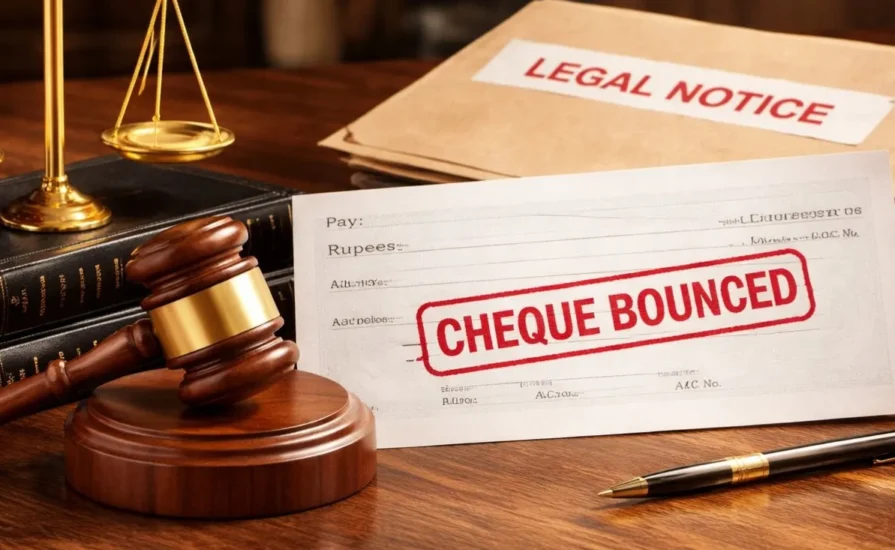
VakeelKerala.com offers access to advocates experienced in cheque bounce proceedings across Kerala’s Magistrate Courts. Our lawyers handle the entire process — from drafting and dispatching the mandatory legal notice within the statutory timeframe to filing complaints, presenting evidence, cross-examining witnesses, and negotiating settlements.
How Our Cheque Bounce Lawyers Help You
- Drafting and sending the mandatory legal notice within 30 days of cheque dishonour
- Filing Section 138 complaints before the competent Magistrate Court
- Court representation for complainants — securing conviction and compensation
- Defence representation for accused — challenging the complaint on legal and factual grounds
- Negotiation and settlement facilitation — reaching amicable financial settlements
- Appeals against acquittals or convictions before the Sessions Court and High Court
- Multiple cheque bounce cases — consolidated handling of bulk dishonour matters
- Recovery proceedings — executing court orders for payment
Frequently Asked Questions — Cheque Bounce Lawyers
What should I do when a cheque bounces?
Send a legal demand notice to the drawer within 30 days of receiving the bank’s return memo. If the drawer fails to pay within 15 days of receiving the notice, file a criminal complaint within 30 days thereafter.
What is the punishment for cheque bounce?
Up to two years imprisonment and/or a fine up to twice the cheque amount. Courts can also order the accused to pay compensation to the complainant.
Is the legal notice mandatory before filing a case?
Yes. Sending a written demand notice within 30 days of cheque dishonour is a mandatory prerequisite. Without it, the complaint is not maintainable.
Can cheque bounce cases be settled out of court?
Yes. The accused can pay the cheque amount plus interest at any stage, and the case can be compounded with court permission. Mediated settlements are common and encouraged.
Who can file a cheque bounce case?
The payee of the cheque or the holder in due course can file the complaint. Companies can file through an authorised representative with a proper board resolution.
What is the time limit for filing a cheque bounce complaint?
The complaint must be filed within 30 days after the 15-day notice period expires without payment. Extensions may be granted by the court for sufficient cause.
Can the accused get bail in cheque bounce cases?
Yes. Cheque bounce is a bailable offence, and the accused is generally granted bail by the court. However, conditions may be imposed.
What if the cheque was issued as security and not for a debt?
The accused often raises this defence. However, courts have held that once a cheque is issued and presented, the presumption is that it was for a legally enforceable debt. The burden shifts to the accused to prove otherwise.